
Horse Racing Odds Explained: Understanding Prices UK
 Available in US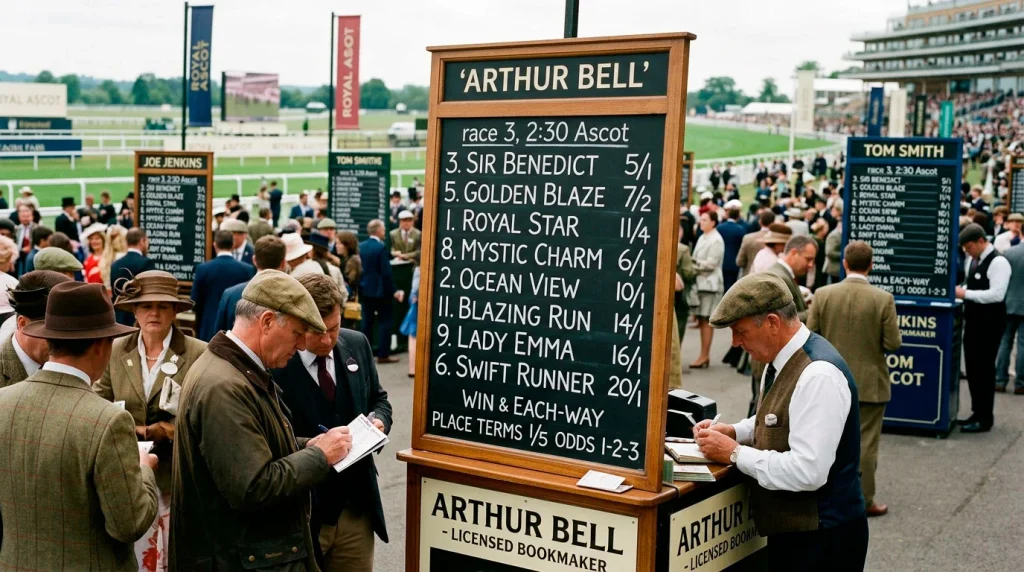
UK racing traditionally uses fractional odds (5/1, 11/4, 6/4), though decimal odds are increasingly common online. Both formats convey the same information differently. This guide explains both systems, shows you how to calculate returns and implied probabilities, and introduces the concept of value betting.
Whether you’re new to racing or want to sharpen your understanding, mastering odds transforms betting from guesswork into informed decision-making.
Horse Racing Odds Explained — More on this topic at horse racing betting sites.
Fractional Odds
Fractional odds remain the UK standard for horse racing. They express potential profit relative to stake—5/1 means £5 profit for every £1 staked, plus your stake returned.
Reading Fractional Odds
The first number represents potential profit; the second represents stake. At 5/1, you profit £5 for every £1 bet. At 1/2, you profit £1 for every £2 bet. The formula is simple: (first number ÷ second number) × stake = profit.
| Fractional Odds | £10 Stake Profit | Total Return |
|---|---|---|
| 10/1 | £100 | £110 |
| 5/1 | £50 | £60 |
| 3/1 | £30 | £40 |
| 2/1 | £20 | £30 |
| Evens (1/1) | £10 | £20 |
| 1/2 | £5 | £15 |
| 1/4 | £2.50 | £12.50 |
Unusual Fractions
Some fractional odds appear complex—11/4, 100/30, 11/8. These work identically: divide first by second, multiply by stake. At 11/4, a £4 bet returns £11 profit plus £4 stake = £15 total. Bookmakers often simplify these (100/30 becomes 10/3) but the calculation remains consistent.
— Gambling Commission Industry Statistics, 2026
Decimal Odds
Decimal odds show total return per unit staked, including stake. They’re simpler for calculating returns but less traditional in UK racing. Online bookmakers typically let you choose between formats.
Reading Decimal Odds
Multiply decimal odds by stake for total return. At 6.0, a £10 bet returns £60 (including your £10 stake). At 1.5, a £10 bet returns £15. The stake is already included—no adding back required.
Converting Between Formats
Fractional to decimal: Divide first by second, add 1. So 5/1 = (5÷1) + 1 = 6.0
Decimal to fractional: Subtract 1, express as fraction. So 6.0 = 6-1 = 5/1
Conversion Examples
5/1 → Decimal: (5÷1) + 1 = 6.0
11/4 → Decimal: (11÷4) + 1 = 3.75
1/2 → Decimal: (1÷2) + 1 = 1.5
4.0 → Fractional: 4-1 = 3/1
2.5 → Fractional: 2.5-1 = 1.5/1 = 3/2 (or 6/4)
Use whichever format feels natural. Most experienced punters think in fractional but appreciate decimal for complex calculations. Betting platforms convert automatically, so understanding both primarily helps when comparing odds across sources.
Implied Probability
Every odds price implies a winning probability. Understanding this connection reveals whether bookmaker prices fairly reflect actual chances—or offer value.
Calculating Implied Probability
From fractional: second number ÷ (first + second) × 100
From decimal: (1 ÷ decimal) × 100
| Odds | Implied Probability |
|---|---|
| Evens (2.0) | 50% |
| 2/1 (3.0) | 33.3% |
| 3/1 (4.0) | 25% |
| 4/1 (5.0) | 20% |
| 9/1 (10.0) | 10% |
| 1/2 (1.5) | 66.7% |
— Gambling Commission Industry Statistics, 2026
Overround Explained
If you add all implied probabilities in a race, they exceed 100%—often 110-120%. This excess is the bookmaker’s margin (overround). It’s why simply backing random horses at offered odds loses money long-term. Beating the margin requires finding value where odds underestimate true chances.
Odds-On & Long Shots
Odds-On Favourites
When odds are below evens (1/2, 4/6, 8/11), the horse is “odds-on”—implied probability exceeds 50%. You risk more than you stand to win. Odds-on horses should win more often than not, but when they lose, recovery requires multiple winners.
Long Shots
Horses at double-figure odds (10/1+) are long shots with low implied probability. They lose far more often than they win, but payouts when successful can be substantial. Each-way betting suits long shots—place returns provide consolation when they finish close without winning.
Mid-Range Odds
Prices between 2/1 and 8/1 represent horses with genuine chances but no certainty. These selections often offer the best balance of win probability and meaningful returns. Many professional punters focus here, avoiding both short-priced poor value and extreme long shots.
— Gambling Survey for Great Britain, 2026
Finding Value
Value exists when odds exceed true probability. If you believe a horse has 25% winning chance but it’s priced at 5/1 (16.7% implied), you’ve found value. Consistently betting positive value leads to long-term profit regardless of individual results.
Assessing True Probability
Estimating actual chances requires form analysis, course knowledge, and understanding race dynamics. There’s no formula—it’s judgment refined through experience. But understanding odds lets you compare your assessment against market prices to identify discrepancies.
Value vs Price
High odds don’t mean value; low odds don’t mean poor value. A 1/2 shot might offer value if it should be 1/4. A 20/1 shot might offer no value if it should be 50/1. Focus on probability assessment, not raw prices.
Value Betting Mindset
Ask “What probability do these odds imply?” then “Do I believe the true probability is higher?” If yes, you’ve found potential value. This approach transforms betting from picking winners to finding mispriced odds—a fundamentally different skill.
Putting Odds Knowledge to Work
Understanding odds is foundational to successful betting. Calculate returns accurately, convert between formats confidently, and assess implied probability to evaluate bookmaker prices. This knowledge supports every betting decision you make.
Value betting—backing horses where odds exceed true probability—is the path to long-term profitability. It requires honest probability assessment and discipline to bet only when value exists. Most punters never develop this approach, settling for picking horses they “like” regardless of price.
Start applying odds analysis to your betting. Before each bet, calculate implied probability and ask whether you genuinely believe the horse’s chances exceed what the price suggests. This simple habit transforms casual betting into informed wagering.
Continuous Learning
Odds understanding improves with practice. Track your probability assessments against actual results—were horses you rated at 25% winning roughly one in four races? This feedback loop refines judgment over time.
Compare your assessments against market prices regularly. If markets consistently disagree with your probability estimates, either the market knows something you don’t, or you’ve found systematic value. Study which scenario applies to your specific selections.
The mathematical foundation covered here supports every betting concept—from each-way calculations to accumulator returns to exchange trading. Invest time understanding odds thoroughly; this knowledge pays dividends throughout your racing betting experience.
See also Non Runner No Bet (NRNB).
