
In-Play Horse Racing Betting: Live Betting Strategy
 Available in US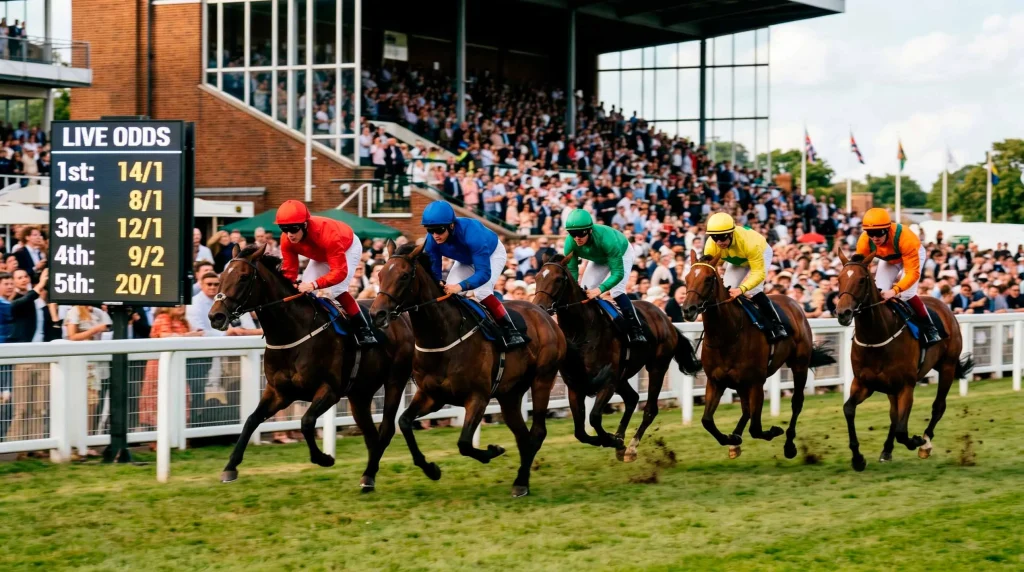
The fast-paced nature of in-play racing demands quick decisions and clear strategy. You might back a horse that’s travelled well into contention, lay one that’s struggling, or trade positions to lock in profit regardless of the result. Understanding in-play mechanics opens new dimensions in racing betting.
This guide explains how in-play racing works, compares platforms, and introduces strategies for betting as races unfold.
In-Play Horse Racing Betting — More on this topic at horse racing betting sites.
How In-Play Racing Works
Traditional bookmaker markets close when races start—the “off” triggers market suspension. In-play betting reopens markets during the race itself, with prices reflecting real-time positions and perceived chances.
Market Timing
Pre-race markets typically close 1-2 minutes before the scheduled start. In-play markets activate once the race begins, though exact timing varies by platform. Some exchanges offer continuous trading through the start; bookmakers typically suspend briefly before reopening in-running.
Price Formation
In-play odds reflect current race positions and perceived finishing chances. The leader’s price shortens dramatically; horses at the back drift to long odds. Prices update every few seconds on exchanges, responding to every position change and perceived momentum shift.
— Gambling Commission Industry Statistics, 2026
Suspension Points
Markets suspend during incidents—falls, loose horses, stewards’ enquiries. You cannot bet during suspensions, which can last seconds or minutes depending on circumstances. This unpredictability is inherent to in-play racing betting.
Bookmakers vs Exchanges In-Play
| Feature | Exchanges | Bookmakers |
|---|---|---|
| Availability | Most UK races | Selected races only |
| Odds quality | Better (peer-to-peer) | Margin included |
| Lay betting | Yes | No |
| Trading | Full functionality | Limited (cash out only) |
| Delay | Minimal | Often 5-10 seconds |
Exchange Dominance
Betfair Exchange dominates in-play racing betting. The peer-to-peer model provides better odds without bookmaker margin. More importantly, lay betting enables trading strategies impossible with traditional bookmakers. Serious in-play punters work primarily on exchanges.
Bookmaker Limitations
Most traditional bookmakers offer limited in-play racing coverage. When available, prices include significant margin and often feature time delays that disadvantage punters. Cash out provides some trading functionality, but with worse terms than exchange trading.
Bookmaker in-play suits casual punters wanting simple bet placement during races. For strategic in-play betting, exchanges offer superior functionality and value.
Reading Live Odds
Position Reflects Price
The clearest in-play signal is position. Leaders show short odds; backmarkers show long odds. But position alone doesn’t tell the whole story—a horse travelling easily in third might show shorter odds than a hard-ridden leader showing signs of tiring.
Momentum Matters
Horses making ground show shortening odds even before reaching contention. The market anticipates finishing positions based on how horses are travelling, not just where they are now. Learning to read momentum helps identify value before prices fully adjust.
In-Play Price Movement Example
Pre-race: Thunder Flash 5.0 (4/1)
Halfway (3rd, travelling well): 3.5
2 furlongs out (challenging): 2.0
Final furlong (leading): 1.3
Result: Won
Early in-play backers captured significant value as the race unfolded.
— British Horseracing Authority, 2026
In-Play Strategy
Trading for Profit
The classic in-play strategy: back a horse pre-race, then lay it at shorter odds during the race to guarantee profit. If you backed at 5.0 and lay at 2.5, you’ve locked in profit regardless of the result. This requires the horse to travel well enough for its price to shorten.
Hedging Losing Positions
If your pre-race selection struggles, you might lay it in-play at long odds to recover some stake. Laying a drifting horse at 20.0 means small liability for meaningful stake recovery if it loses as expected.
Late Backing
Some punters ignore pre-race markets entirely, backing only in-play when they see how races develop. This approach sacrifices pre-race value but gains information about how horses are actually running. It suits visual analysts who read races well.
Watching for Trouble
Horses encountering trouble—blocked runs, interference, ground issues—often drift despite having winning chances if circumstances improve. Spotting trouble that markets overreact to creates value opportunities for observant in-play punters.
Risks & Limitations
Time Delay
Video feeds lag behind reality by several seconds. What you’re watching has already happened—and the market has already reacted. This delay means you’re often chasing prices that have moved by the time your bet is placed.
Suspension Risk
Markets can suspend at critical moments—just when you want to trade out or place a bet. Suspensions are unpredictable and can last long enough to materially change your position. Never assume you can exit a position via in-play trading.
Emotional Decisions
The fast pace of in-play betting triggers emotional responses. Chasing losses, panic laying, and impulsive backing all damage results. In-play requires even more discipline than pre-race betting because decision time is compressed.
Critical Warning
Never rely on in-play exit as your risk management strategy. Markets suspend without warning; delays prevent execution at expected prices. Only bet in-play with stakes you’re comfortable losing entirely if exit proves impossible.
Developing In-Play Skills
In-play betting offers unique opportunities for punters who understand race dynamics and can execute under pressure. Start by watching races while monitoring live odds—observe how prices respond to position changes and momentum shifts without betting. This builds pattern recognition before real money is involved.
When ready to bet in-play, begin with small stakes on exchanges where functionality is best. Focus on trading existing positions rather than pure in-play backing initially. The ability to both back and lay creates flexibility that bookmakers cannot match.
Accept that in-play carries risks beyond pre-race betting—delays, suspensions, and emotional pressure all challenge punters. Those who develop genuine skill find in-play rewarding; those who approach it casually often find it costly. Invest time learning before investing significant money.
Building Your In-Play Approach
Choose specific race types to focus on initially. Longer races—staying chases, two-mile hurdles—provide more decision time than five-furlong sprints where everything happens in 60 seconds. Start where pace suits your reaction speed.
Keep records of your in-play betting separately from pre-race results. Track what worked, what didn’t, and why. In-play demands constant improvement—your records reveal patterns that guide development.
The combination of pre-race analysis and in-play execution creates opportunities neither approach offers alone. Master both dimensions to become a more complete racing punter with tools for every market condition.
See also Horse Racing Odds Explained.
