
Spread Betting Horse Racing: Margins & Distances
 Available in US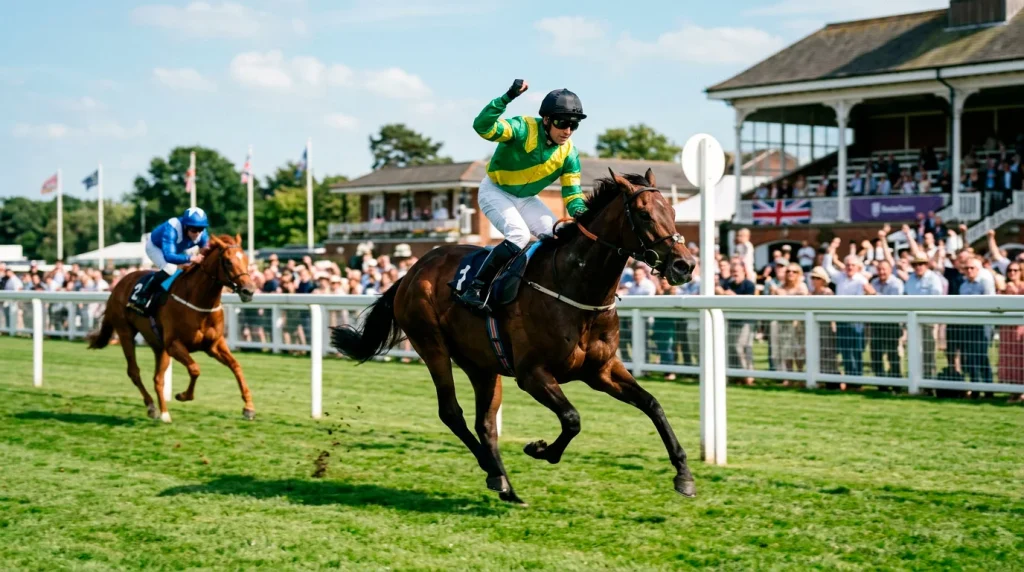
This creates unique opportunities—but also enhanced risks. Understanding spread mechanics, available markets, and proper risk management is essential before engaging with this form of racing betting. The potential for losses exceeding your stake makes spread betting unsuitable for casual punters.
This guide explains spread betting mechanics, introduces key racing markets, and emphasises the risk management crucial for this higher-stakes approach.
Spread Betting Horse Racing — More on this topic at horse racing betting sites.
How Spread Betting Works
Spread betting firms quote a range (the spread) for various racing outcomes. You decide whether the actual result will be higher (buy) or lower (sell) than the quoted spread. Your profit or loss equals the difference multiplied by your stake per point.
Spread Betting Example: Winning Distance
Spread quoted: Thunder Flash winning distance: 2.5-3.0 lengths
Your bet: Buy at 3.0 for £10 per length
Result: Thunder Flash wins by 6 lengths
Profit: (6 – 3.0) × £10 = £30
Alternative result: Thunder Flash wins by 1 length
Loss: (3.0 – 1) × £10 = £20
The Spread Itself
The gap between buy and sell prices represents the spread firm’s margin. Buying at 3.0 and selling at 2.5 means the firm profits from that 0.5-length gap. Wider spreads indicate less liquid markets or greater uncertainty; tighter spreads appear on major races.
Variable Outcomes
Unlike fixed-odds where outcomes are binary (win/lose), spread results fall on a continuum. Extreme results—whether in your favour or against—amplify profits and losses proportionally. This leverage works both ways.
— Gambling Commission Industry Statistics, 2026
Racing Spread Markets
Winning Distances
The most popular racing spread market. You predict how far the winner will beat the field. National Hunt races typically show wider distance spreads; flat sprints show tighter ones. Big-field handicaps create uncertainty that spreads reflect.
Favourites Index
Points awarded based on favourite performance across a meeting. First favourite wins might score 25 points; second favourite placing scores 10. The index totals performance across all races. Buy if you expect favourites to perform well; sell if you expect upsets.
Jockey/Trainer Performance
Similar index markets track jockey or trainer performance across meetings. Points for winners, places, and placed favourites aggregate into a daily total. These markets suit punters with opinions on overall performance rather than individual races.
Match Bets
Spread firms offer head-to-head markets between two horses. The spread reflects expected distance between them at finish. Buy the horse you think finishes further ahead; sell if you expect the other to dominate.
Spread Betting Providers
| Provider | Racing Coverage | Minimum Stake | Key Features |
|---|---|---|---|
| Spreadex | Extensive UK racing | £1 per point | Best racing range |
| Sporting Index | Good UK coverage | £1 per point | Racing specials |
Spreadex leads racing spread coverage, offering markets on most UK meetings with competitive spreads. Sporting Index provides solid alternative coverage. Both require separate accounts from traditional bookmakers—spread betting operates under different regulatory frameworks.
— Gambling Commission Industry Statistics, 2026
Risk Management
Spread betting losses can exceed your stake—this is the critical difference from fixed-odds betting. Proper risk management isn’t optional; it’s essential for survival.
Stop Losses
Most spread firms offer stop losses limiting maximum loss on a position. Setting a stop at 5 lengths on a winning distance market caps your loss regardless of actual result. Stop losses cost slightly in spread width but provide crucial protection.
Position Sizing
Calculate maximum possible loss before betting. On a winning distance market with potential swings of 10+ lengths, a £10 stake risks £100+. Size positions based on worst-case scenarios, not expected outcomes.
Capital Allocation
Never risk more than 2-5% of your spread betting capital on any single position. The leverage inherent in spreads means a few bad results can devastate poorly-managed accounts. Conservative position sizing ensures longevity.
Critical Warning
Spread betting involves substantial risk of loss exceeding your initial stake. It’s classified as a leveraged product and is unsuitable for most recreational punters. Only bet with money you can afford to lose entirely, and never spread bet without understanding maximum potential loss on every position.
Spreads vs Traditional Betting
When Spreads Make Sense
Strong opinions about margin of victory suit spread betting. If you believe a horse will dominate rather than simply win, spreads capture that conviction better than fixed odds. Index markets suit punters with views on overall patterns rather than individual results.
When Traditional Betting Wins
For most recreational punters, fixed-odds betting offers appropriate risk profiles. Known maximum losses, simpler mechanics, and broader market availability favour traditional approaches. Spread betting suits experienced punters comfortable with leverage.
Consider spreads as a complement to traditional betting rather than replacement. Selective spread positions on races where you have strong distance opinions can enhance returns—but only with proper risk controls in place.
Approaching Spreads Responsibly
Spread betting offers unique opportunities for punters with strong opinions about racing margins and performance patterns. The variable returns create leverage that amplifies both profits and losses beyond traditional fixed-odds betting.
Success requires disciplined risk management. Use stop losses consistently, size positions conservatively, and never risk capital you can’t afford to lose entirely. The punters who profit from spreads treat risk management as seriously as selection—often more so.
If spread betting appeals, start with minimum stakes while learning market dynamics. The leverage that makes spreads exciting also makes them dangerous for underprepared punters. Invest time understanding mechanics before investing significant money.
Your Spread Betting Pathway
Begin with paper trading—record hypothetical positions and track how they would have settled. This reveals how spreads behave without financial risk. Only move to real money once you understand profit and loss patterns across multiple race types.
When ready for real stakes, start at minimum levels (typically £1 per point). Focus on markets you understand best—perhaps winning distances in jumps racing where you have form expertise. Build position sizing gradually as experience develops.
Consider spread betting as one tool among many rather than your primary betting approach. The right spread position on the right race can enhance returns significantly—but the wrong position with poor risk management can devastate a bankroll quickly. Respect the leverage.
Track all spread betting results separately from traditional betting. The different risk profile means spread betting performance should be evaluated independently. Over time, you’ll identify which spread markets suit your analysis style—and which to avoid.
See also Virtual Horse Racing Betting.
